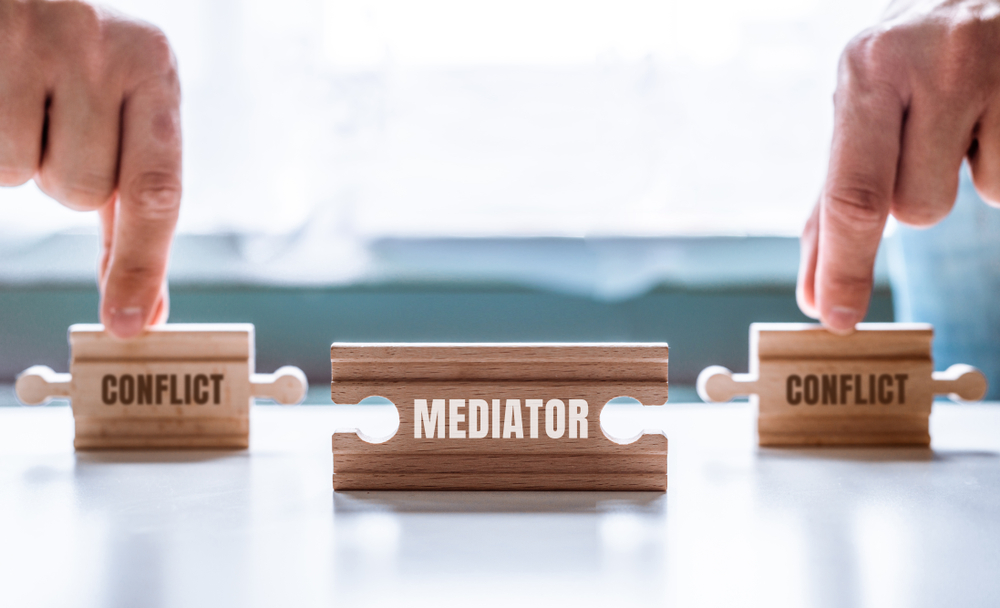
Mediation: An Adaptable Process for Resolving Disputes
What is Mediation primarily?
Mediation is a way of resolving disputes between two or more parties outside the scope of formal litigation. It is an informal, confidential, flexible process in which the mediator assists the parties to negotiate a settlement.
The mediator is primarily a process person, a facilitator, helping the parties define their agenda, identify the issues, communicate more effectively, generate options for mutual gains, and negotiate impartially to reach a mutually agreeable solution. Unlike arbitration, where the Arbitrator listens to the arguments of both sides and makes a decision, a mediator assists the parties to develop a solution themselves.
Mediators sometimes provide ideas, suggestions, or even formal proposals for a settlement.
What are the key elements of Mediation?
1) Voluntary: It is a voluntary process wherein participation of both the parties is required. A mediation session cannot be scheduled unless parties agree to mediate. Since the parties have no legal liability, they are free to walk out of the process.
2) Non-binding: The process in non-binding until a settlement agreement is formed. It neither binds the parties to reach to an agreement nor imposes any decision on the parties.
3) Private Process: The process is private and confidential ‘without prejudice’ to the legal proceedings. Any statement given by the parties during negotiation process is not admissible as an evidence in legal proceedings. However, once the settlement is reached and an agreement is signed by parties, it can be enforced legally.
4) Flexible: The process is flexible wherein parties can settle the dispute on their own terms and conditions. A mediator does not judge or impose decision. The parties are free to set their own criteria for amicable settlement.
Why choose Mediation
Mediation is not a new phenomenon in the construction industry to resolve conflict. It is now widely used as an alternate dispute resolution and provides benefits when compared to arbitration and litigation.
Some of the benefits include:
• Control: The outcome is controlled by the parties. It is the parties who decides on the terms and conditions of settlement agreement and not the mediator.
• Flexibility: The process can be tailored to suit the need of parties. Mediators have opportunities to use innovative processes for managing conflict.
• Cost and Time efficient: Mediation usually produces results in a relatively short time (few days or weeks or a month). Mediation will probably be resulting successful resolution while saving considerable time and cost (*affordable) when compared to litigation or arbitration.
• Confidential: Negotiations are dealt privately which allows the parties to frankly discuss about facts, their positions, their interest, and various options of settlement.
What is the process of Mediation?
Structured mediation ideally involves a 5 step process, each with different goals and objectives:
1) Preparation: A crucial stage where the mediator meets with the parties either in person (privately or jointly) or over the phone and starts building a relationship and trust with the parties. Mediator’s role is to educate the parties about his role and ensure that parties are committed to the process. Before the process takes place, the mediator helps the parties by:
• Explaining the process of mediation
• Setting up and deciding an appropriate venue for mediation
• Explain about confidentiality and privilege
• Identify the best way to communicate/contact the parties
• Asking for a preliminary session individually with the parties to obtain information about the dispute and identify the reason why the dispute is not settled. Mediator, to create transparency and to be fair, shall inform the parties about holding a preliminary session
• Answer further questions from the parties.
2) Opening Statement: This is when the mediation begins. Mediator, under this process will make an opening statement in front of the parties and set the tone for the process. The key is to begin the process by creating a positive atmosphere, foster confidence, and trust in the parties and therein by taking control and setting the agenda for the process. An opening statement by a mediator primarily covers below crucial points:
• Self-Introduction
• Congratulate parties for attending.
• Explain the role of Mediator (Neutral, impartial, assist the parties to reach agreement but will impose any decisions)
• Explain the goal (to reach a settlement) and ground rules of mediation (not to verbally attack other parties, not to interrupt the process)
• Emphasis on the voluntary nature of mediation
• Explain the next process after opening statement.
• Ask parties to make an opening statement providing a summary of dispute from their perspective. Ideally, first chance to present the case is given to the claimant. However, the decision lies with the mediator. An opening statement by the parties allows mediator to know more about the facts and issues.
• Set the agenda for the process.
3) Exploration: Mediator’s responsibility under this stage is to identify all the issues raised by the parties. This can be done either privately with the party or in a joint session. An important phase, where mediator not only needs to know the facts by asking who, what, why, where when and how, but also be a listener. The parties during the process should not get an impression that they are not being heard.
During exploration, mediator’s objective is to explore information, open discussion with parties, understand parties’ position & interest, challenge parties’ ideas, invent option for mutual gains and guide the parties to make decisions.
4) Negotiation with parties: After exploration, Mediator will steer the negotiation process to an interest-based negotiation. The outcome of the negotiation process heavily relies on the mediator’s ability to ensure that parties are focusing on the interest and not on the positions. Multiples options, based on interest, goals, and needs of the parties are generated for mutual gains and settlement.
During the process, mediator needs to:
• Focus on parties’ interest
• Encourage parties to generate multiple options in a joint session
• Brainstorm
• Generate possible solutions
• Set objective criteria
• Make process forward.
5) Settlement Agreement & Closure: Once the parties reach settlement, mediator needs to prepare a settlement agreement for the parties’ signature, which upon signature will be legally binding.
A successful mediation effort has an outcome that is accepted and owned by the parties themselves.
Key takeaways:
1) Treat the parties with empathy
2) Be a good listener
3) Understand the interest and common ground.
The author is MRICS, MCIArb, MCInstCES, MCIOB, RICS accredited Commercial Mediator.
You could write to the author at kamal@kamaldubey.com.